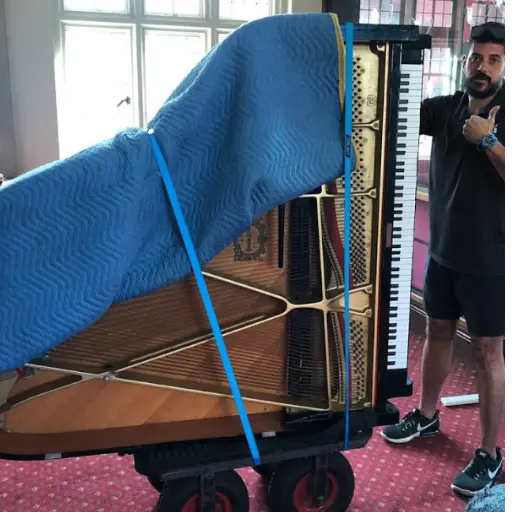
Moving heavy or bulky furniture on your own comes down to three things: the right tools, the right technique, and a plan for tight spots like stairs and doorways. With furniture sliders, a dolly, and proper lifting form, most solo moves are doable safely — the biggest risks are back injuries from bad lifting and damage from rushing through narrow spaces.
Before You Lift Anything
Check the size and weight of the piece against the path it needs to travel. Measure doorways, hallways, and stairwells, and confirm the furniture will actually fit through — this is the single most common cause of a move going wrong.
- Clear the path — remove rugs, toys, and anything else you could trip over.
- Lighten the load first — take out drawers, cushions, and any removable parts before you lift.
- Disassemble where you can — unscrewing legs or arms often turns an impossible piece into a manageable one. Keep screws and small parts together in a labelled bag.
The Tools That Actually Make a Difference
- Furniture sliders — placed under the legs, they let heavy pieces glide across the floor instead of being lifted. Felt pads work on hard floors, plastic or cardboard on tile.
- A moving dolly — for pieces too heavy to slide comfortably, a dolly does the carrying for you. Worth renting if you don’t own one.
- Lifting straps — distribute weight across your whole body instead of just your arms, useful for two-person carries.
- Gloves — better grip, fewer dropped corners.
- Furniture pads or old blankets — protect both the furniture and your walls/staircase from scratches during the move.
Lifting Technique — the Part That Prevents Injury
Bend your knees, not your back, and keep the piece close to your body as you lift — your legs are far stronger than your lower back, and most moving injuries come from ignoring this. If something is too heavy to lift safely, slide it instead; there’s no prize for muscling through it.
Moving Furniture Down Stairs
Stairs are where solo moves most often go wrong, because you’re managing weight, balance, and blind corners at the same time.
- Go slowly and adjust your grip with each step — don’t try to control the whole descent from the top.
- Secure any loose parts (drawers, doors, cushions) before you start so nothing shifts mid-carry.
- Protect the staircase itself — pad the edges and corners the furniture will pass close to.
- If a piece is too large or heavy to control alone on stairs, that’s the point where a second pair of hands (or professional help) stops being optional and starts being a safety call.
When It’s a Two-Person Job
Large or awkward pieces go faster and safer with a second person — split the weight, agree on when to lift/turn/set down before you start, and communicate throughout rather than rushing. If you don’t have help available and the piece is genuinely too heavy or awkward for stairs or tight corners, a labour-only moving service (just the lifting, no truck) is usually far cheaper than a full moving crew and solves exactly this problem.
Frequently Asked Questions
Can I move heavy furniture down stairs by myself?
Yes, for most pieces — with furniture sliders or a dolly, proper lifting technique, and by securing loose parts first. For anything you can’t control safely on the stairs alone, bring in a second person or professional help rather than risk injury or damage.
What’s the cheapest way to move furniture without hiring a full moving crew?
Borrowing or renting a truck, asking friends or family to help, and disassembling large pieces to make them lighter and smaller are the biggest cost-savers. A labour-only service (movers who handle the lifting but not the driving) is a middle ground if you need help but not a full crew.
Do I need special equipment to move furniture on my own?
Furniture sliders and a moving dolly cover most situations and are inexpensive to buy or rent. Lifting straps and gloves help too, especially for two-person carries.
How do I avoid damaging my furniture or walls while moving?
Pad the corners of furniture with cloths or cardboard, use sliders on hard floors, and protect stairwell corners and door frames the piece will pass close to. Measuring the path before you start prevents most of the damage that happens from forcing a piece through a space it doesn’t fit.
